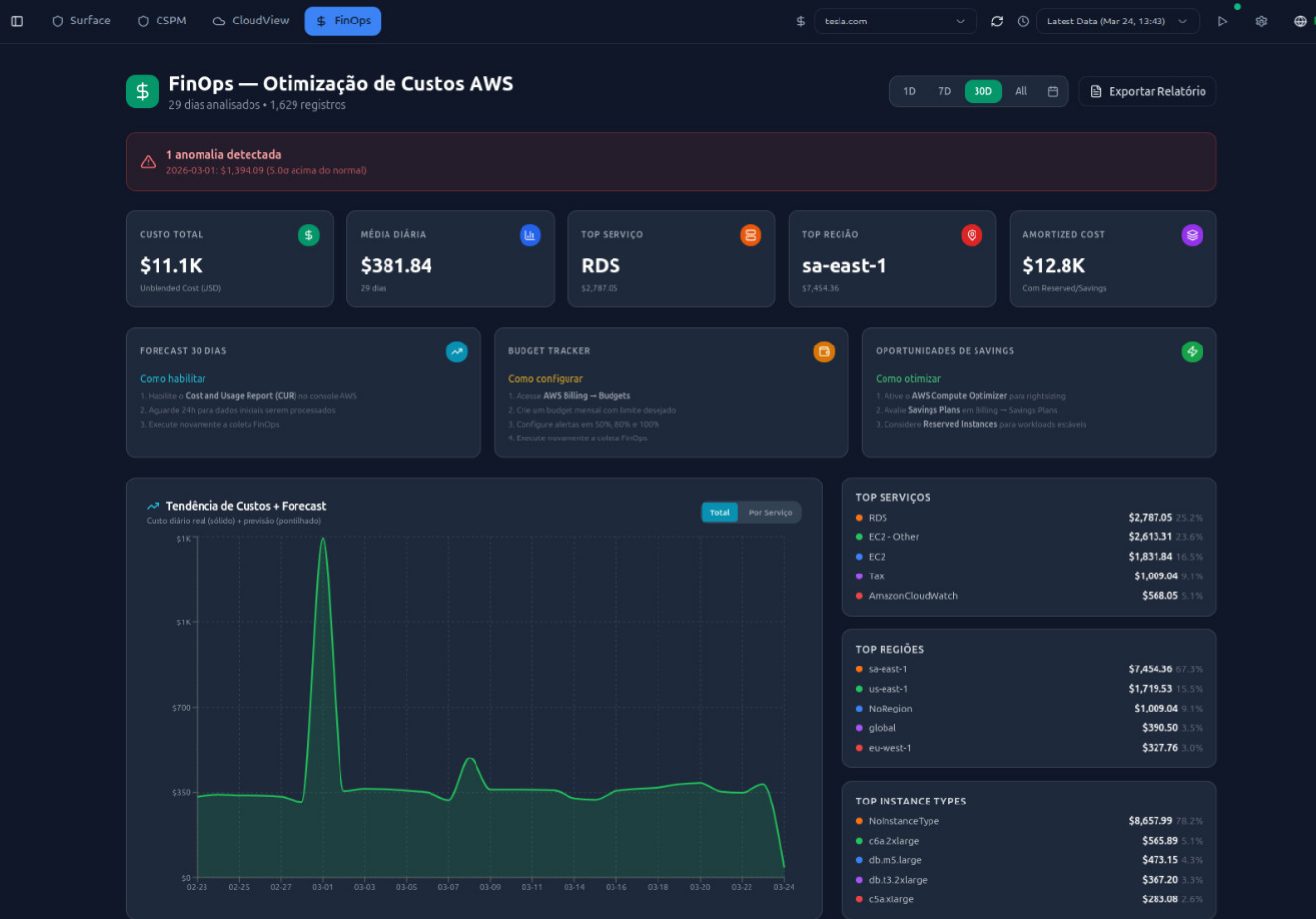
What is FinOps?
Imagine managing cloud costs like managing household bills: you need to know how much you spend on each service, who's consuming what, where you can save, and how to plan future expenses. FinOps (Financial Operations) is exactly that - a methodology that unites finance, technology, and business to manage cloud spending intelligently.
Unlike traditional fixed bills, cloud charges for actual consumption: every server running, every GB stored, every request processed. Without proper control, costs can grow 30% or more per year without anyone noticing. FinOps solves this by providing visibility, control, and automation to transform cloud into a competitive advantage instead of an uncontrolled cost center.
Why Your Company Needs FinOps
Common Challenges
- •Unexpected bills that are difficult to understand
- •Paid but unused resources (forgotten running machines, duplicate storage)
- •Lack of clarity about who spends what and why
- •Difficulty predicting future costs or justifying investments
Tangible Benefits
- Reduce cloud costs by 20-40% in the first year
- Improve financial forecast accuracy
- Accelerate innovation with clear and predictable budgets
- Strengthen collaboration between technical and financial teams
How It Works (Essential Pillars)
1. Total Multi-Cloud Visibility
Unified dashboard showing all spending across AWS, Azure, Google Cloud, and other providers in one place. Automatically identifies all active resources: servers, databases, storage, networks, serverless functions, and AI services.
2. Intelligent Cost Allocation
Automatically distributes spending by department, project, client, or cost center using tags and custom rules. Allocates shared costs (like technical support) proportionally among teams, providing transparency for chargeback or showback.
3. Continuous Automatic Optimization
Identifies idle or oversized resources and suggests immediate savings. Recommends savings plans (1-3 year reservations) based on historical usage patterns. Automates shutdown of development environments outside business hours.
4. Planning and Forecasting
Projects future spending based on historical growth and business plans. Creates per-team budgets with automatic alerts when limits are reached. Simulates financial impact of new projects before implementation.
The Critical Connection Between FinOps and Security
Security Generates Costs, FinOps Reveals the Investment
Many organizations don't know how much they really spend on cloud security because costs are dispersed: firewalls, intrusion detection systems, audit logs, compliance tools, and redundancy for resilience. FinOps makes this investment visible, enabling you to justify security budgets with concrete data.
Misconfigured Resources: Double Risk
Incorrect security configuration not only exposes your company to attacks - it can generate astronomical costs. FinOps identifies these anomalies before they become financial crises.
- •Publicly exposed databases processing massive attacks
- •Excessive logs generating petabytes of unnecessary storage
- •Oversized security systems consuming more resources than necessary
Optimization Without Compromising Protection
FinOps doesn't mean indiscriminately cutting security costs - it means investing intelligently. The platform helps:
- Identify redundancies
- Properly size security tools
- Prioritize investments in critical protections vs. excess
- Automate compliance reducing audit costs
Anomaly Detection as a Security Indicator
Sudden cost spikes can indicate security issues. FinOps continuous monitoring functions as an additional threat detection layer:
- •Compromised accounts mining cryptocurrency
- •DDoS attacks generating massive traffic
- •Data exfiltration causing abnormal transfers
Platform Features
Executive and Technical Dashboards
Customized visualizations by profile: CFOs see financial trends and budget comparisons, CTOs analyze technical efficiency and project ROI, and engineers identify optimization opportunities in real-time.
Proactive Alerts and Anomalies
Automatic notifications via email, Slack, or Teams when budgets are exceeded, spending increases unexpectedly (possible problem indicator), or new savings opportunities are identified.
Compliance Reports
Automatic generation of evidence for audits and certifications (ISO 27001, SOC 2, PCI-DSS). Demonstrates financial controls and governance to investors and partners.
Benefits by Stakeholder
For CFOs and Finance
- Budget predictability with accurate forecasts
- Reduction of surprises in monthly bills
- Ability to demonstrate cloud investment ROI with concrete data
For CTOs and IT Leadership
- Alignment between technical capacity and financial reality
- Identification of projects generating the most value per dollar invested
- Democratization of cost responsibility among teams
For Developers and Engineers
- Visibility of financial impact of architectural decisions in real-time
- Autonomy to optimize within clear budgets
- Elimination of bureaucratic approval processes for resources within limits
For Security Teams
- Data-based justification for protection investments
- Visibility of compliance and security tool costs
- Early detection of anomalies that may indicate compromise
Practical Use Cases
Cloud Migration
Plan and validate savings before, during, and after on-premises to cloud migration
Multi-Cloud Environment
Manage unified costs for AWS, Azure, and GCP without switching portals
Growing Companies
Scale infrastructure with confidence knowing costs are under control
Regulatory Compliance
Maintain continuous evidence of financial governance for audits
Integrated DevOps and FinOps
Incorporate cost awareness into the development cycle (shift-left)
Fast Implementation
Connection in Minutes
Secure API integration (read-only) with major cloud providers. First insights available in less than 1 hour after connection.
No Complex Installations
SaaS solution requiring no agent installation, additional software, or changes to existing infrastructure.
Specialized Support
FinOps-certified professionals assist with initial setup, policy definition, and team training.
Organizations use an average of 4.1 tools as part of their FinOps practices, demonstrating the complexity of the challenge and need for integrated solutions.
Mature FinOps companies report consistent savings of 20-40% per year while maintaining or improving performance.