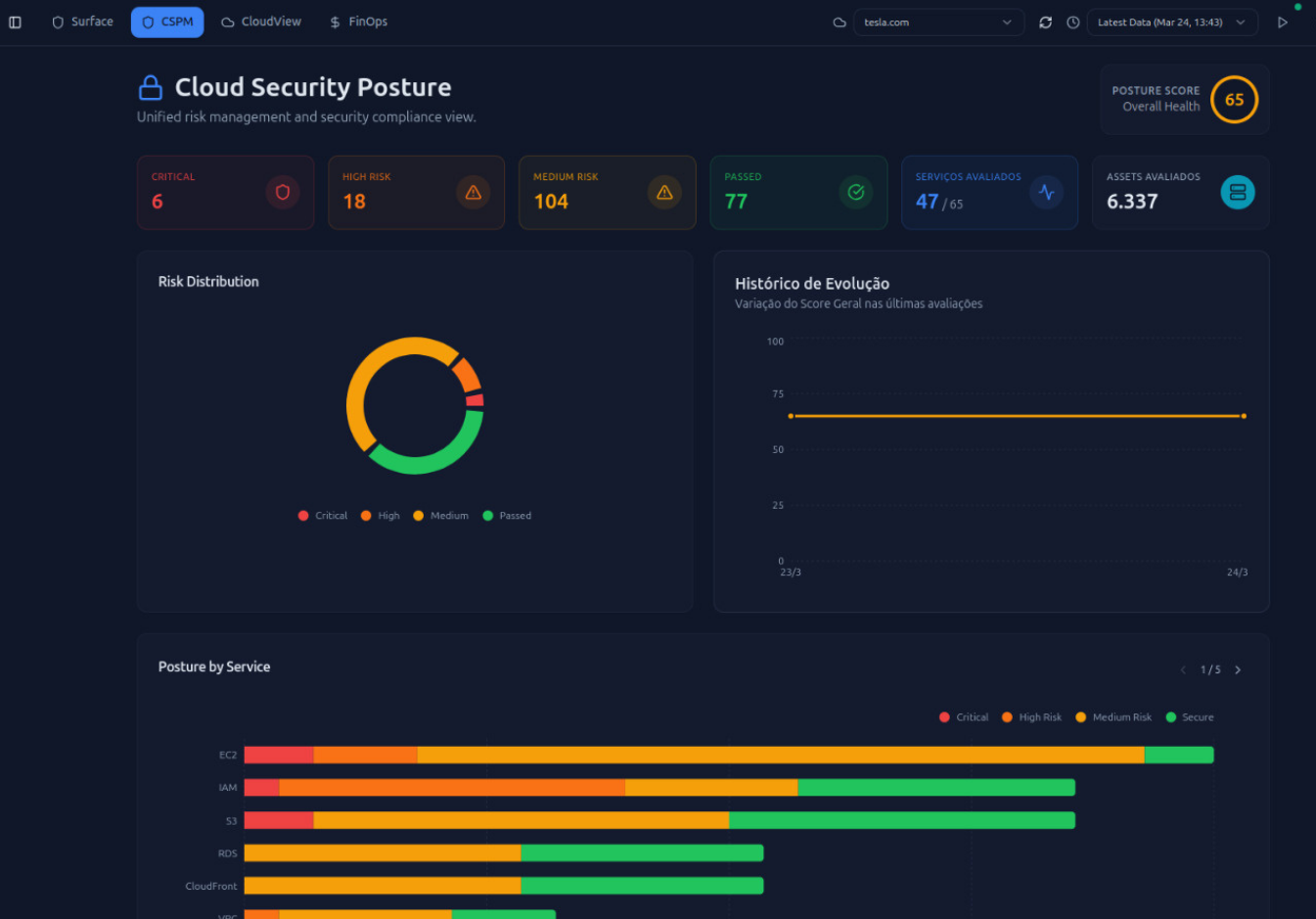
What is CSPM?
Think of the cloud as a large digital condominium where your company rents several apartments (servers, databases, applications). CSPM is like having a specialized property manager who constantly checks if all doors are locked, windows are closed, alarms are working, and only authorized people have access.
Many companies migrate to the cloud quickly and unknowingly leave 'open doors' - incorrect configurations that can expose sensitive data or allow unauthorized access. CSPM continuously monitors your cloud infrastructure and alerts you to these flaws before they cause damage.
Why Your Company Needs This
The Modern Cloud Challenge
Cloud environments grow rapidly: new servers, databases, and applications are created daily. Each new resource can introduce vulnerabilities if not configured correctly. Manual verification is impossible - that's where CSPM comes in.
Common Risks
- Databases accidentally exposed publicly on the internet
- Excessive permissions allowing users to access confidential information
- Weak passwords or insecurely stored credentials
- Lack of encryption on sensitive data
- Disabled audit logs, making investigations impossible
How It Works
1. Fast, Agentless Connection
Connects to major cloud providers (AWS, Azure, GCP) in minutes through secure APIs, with read-only permissions. No need to install software on your servers or do complex configurations.
2. Automatic and Continuous Inventory
Creates a complete map of everything in your cloud: virtual machines, containers, databases, serverless functions, AI services. As your infrastructure grows, the system automatically keeps track.
3. Best Practice-Based Verification
Compares your configurations against over 2,800 security rules based on globally recognized frameworks (CIS Benchmarks, PCI-DSS, OWASP). Identifies deviations from best practices in real-time.
4. Intelligent Prioritization with Context
Doesn't just list problems - shows which ones really represent critical risks. Correlates misconfigurations with public exposure, vulnerabilities, sensitive data, and possible attack paths to prioritize what matters.
5. Remediation Guidance
Provides clear instructions on how to resolve each problem, with AI support. Enables automatic remediation of recurring failures, drastically reducing response time.
Business Benefits
Prevention of Costly Incidents
Avoid data breaches, intrusions, and regulatory fines by identifying and fixing flaws before they are exploited. A single security incident can cost millions in financial losses and reputation damage.
Simplified Compliance
Continuously meet over 250 compliance frameworks (GDPR, ISO 27001, PCI-DSS, SOC 2). Generate executive and detailed reports with one click for audits and certifications.
Operational Efficiency
Eliminate manual checks that consume hours of team time. Automate problem discovery and focus only on critical risks, allowing your team to work more strategically.
Security Democratization
Distribute protection responsibility across different teams. Developers, operations, and security work together with shared visibility and clear context.
Security from the Start (Shift-Left)
Integrate security checks into the development process, detecting misconfigurations in infrastructure code (Terraform, CloudFormation) before they reach production.
Solution Differentials
100% agentless visibility: No additional software on your servers
Implementation in minutes: Fast API connection, immediate results
Multi-cloud coverage: AWS, Azure, and GCP in a single platform
Attack path analysis: Understand how an attacker could exploit combined vulnerabilities
Continuous monitoring: Automatic scans without scheduling needed
AI support: Extends protection to AI models, training data, and AI services
Practical Use Cases
Companies in Digital Transformation
Ensure security during cloud migration
Multi-Cloud Organizations
Manage security across AWS, Azure, and GCP in one place
Regulated Sectors
Maintain continuous compliance in healthcare, finance, and retail
DevOps Teams
Integrate security into the development pipeline
Risk Management
Demonstrate security posture to investors, clients, and partners